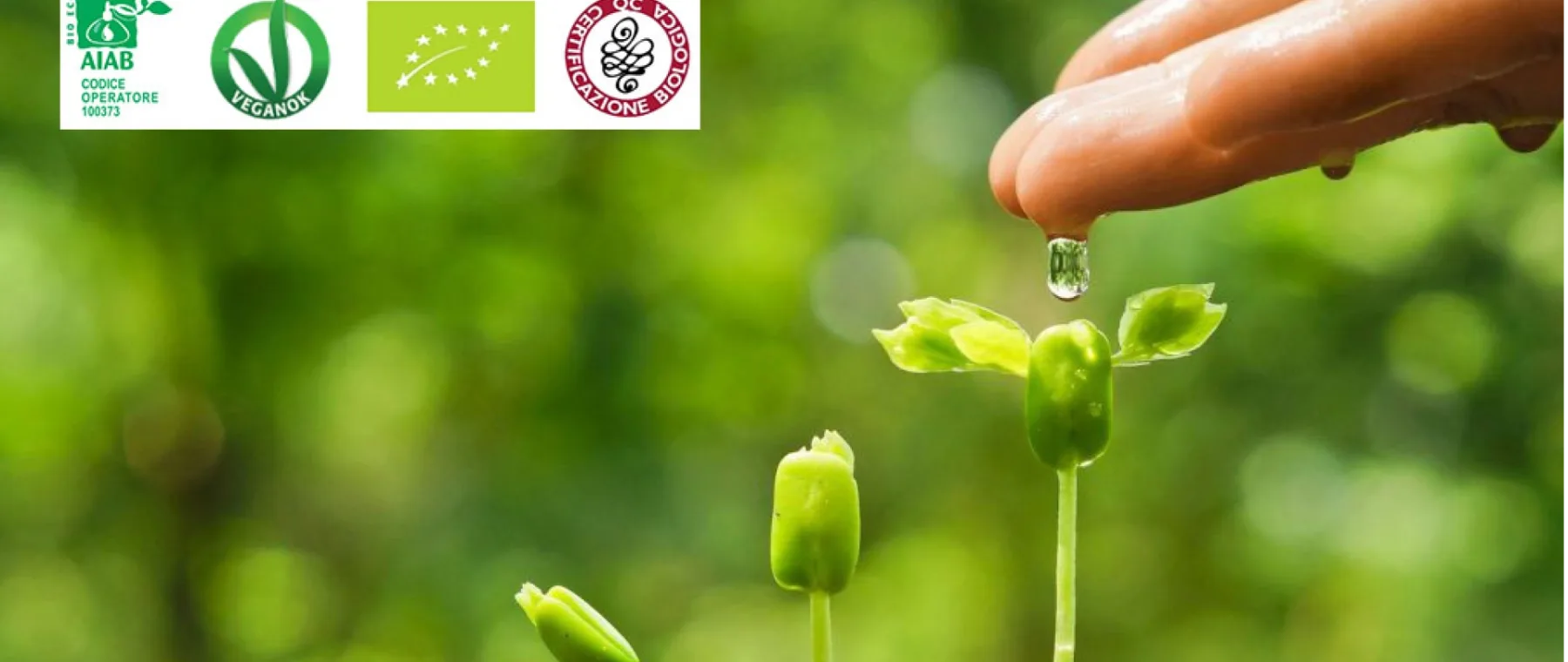
By using recognized certification marks, companies communicate to consumers the care they take in selecting raw materials, guiding them toward making informed purchasing decisions.
All Naturetica products that we declare to be gluten-free are certified as such in accordance with European Commission Implementing Regulation No. 828/2014, through analysis of the gluten content in each batch of finished product; furthermore, in our dietary supplements, we use only vegetable capsules made from hydroxypropyl methylcellulose and manufactured in accordance with GMP standards.
To ensure quality, every Naturetica product is tested by specialized certification bodies.
VEGAN-FRIENDLY
 A company that decides to self-certify a product according to the standard VEGANOK, operates in accordance with European regulations UNI EN ISO 14021(Type II environmental label issued without independent third-party certification by manufacturers, importers, distributors, and retailers).
VEGANOK is the most widely used standard in Italy that guarantees consumers specific ethical and environmental characteristics.In particular, it guarantees that each individual product bearing the VEGANOK label (Self-declared environmental claim, 3.1.16)—which must appear on the label of every registered product—complies with the VEGANOK specifications (Explanatory Statement, 3.1.7
TheVEGANOKteam conducts an ethical assessment of the company before granting permission to use theVEGANOK label. In addition, product labels are inspected before the products are placed on the market. The company commits to fully complying with theVEGANOKEthical Guidelines, developed under the supervision of the Ethical and Scientific Committee of the Associazione Vegani Italiani Onlus.
Essentially, by purchasing a product bearing the VEGANOK logo on its label, the consumer implicitly receives a guarantee from the manufacturer that the product does not contain any animal-derived ingredients and therefore did not directly involve the exploitation or killing of animals of any kind.
ORGANIC
 Companies in the agri-food sector that intend to become part of the organic supply chain must undergo certification in accordance with the EC Regulation No. 834/2007.
The organic supply chain encompasses both the primary production of a product and its processing.
With regard to primary production, the Regulation defines a production method that takes into account all forms of crop cultivation and livestock farming aimed at enhancing and preserving organic production systems, without the use of synthetic chemicals, thereby protecting the environment and preserving rural areas, making the best possible use of renewable energy, and making the most of local, environmental, and natural resources.
The essential technical principles of organic farming are:
The Regulation defines processing companies as all those that engage in the preparation, packaging, labeling, importation, and distribution of organic products.
Processing must be carried out using Ingredients organic farming and by reducing the use of additives, limiting their use, where possible, to those included in the list authorized by the European regulation.
Appropriate processing and packaging procedures must also be adopted, ensuring that both organic raw materials and finished products are correctly identified within the production facility.
AIAB ORGANIC AND ECO-FRIENDLY COSMETICS
 These are standards owned by AIAB (Italian Association for Organic Agriculture).
AIAB certification labels indicate that a production method has been adopted that involves the use of high-quality raw materials with a low environmental impact. The recognizability of AIAB labels allows consumers to immediately identify certified products.
The main features of the AIAB guidelines are as follows: