

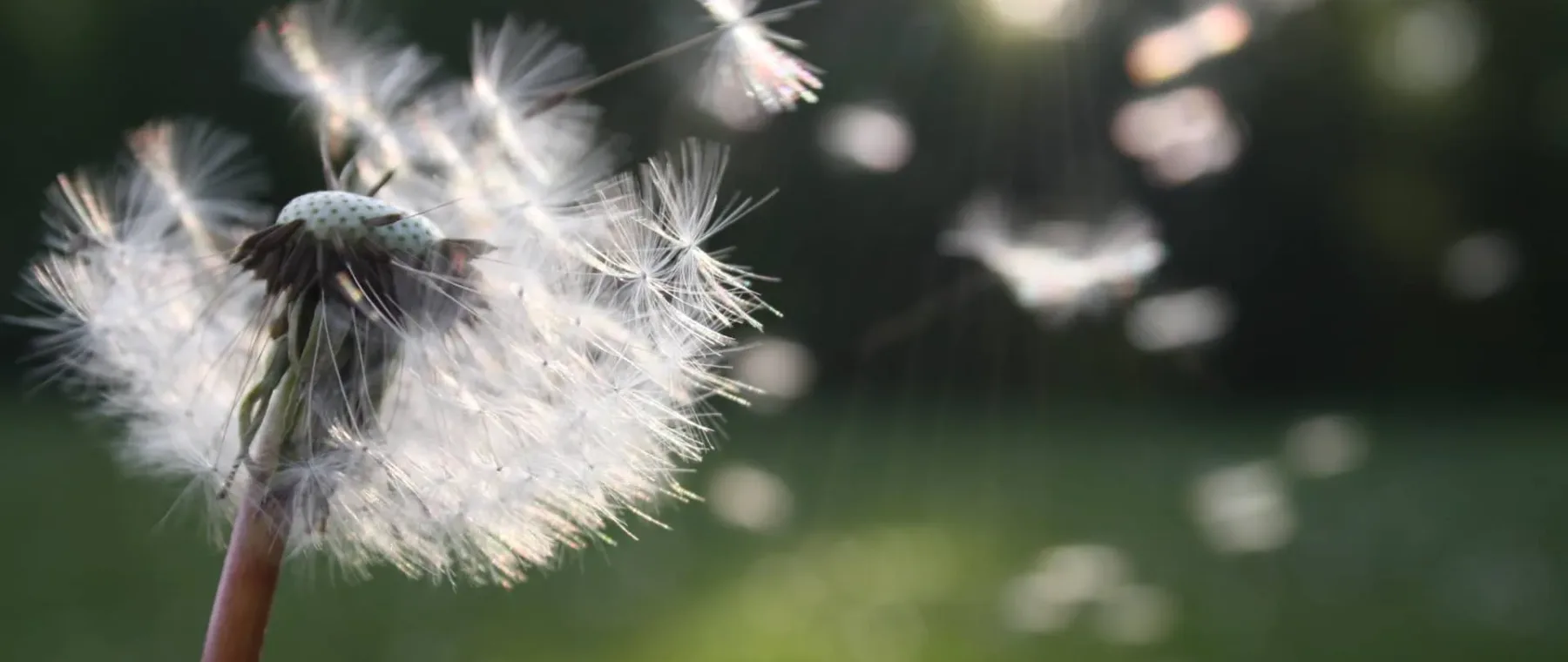
Although these gray days would suggest otherwise, spring has officially kicked off. It is a magical time of year, when city streets and meadows are colored with fragrance, flowers and beauty...while also causing some annoying problems for some of us.
Yes, we are talking about seasonal allergies.
Pollination
This is how the period when the flowering of pollen-producing plants and trees occurs is defined. Of course, the onset and duration of pollination depends on the species: for example, poplar and willow range from March to September, while birch and yew from February until May (if you are curious take a look at the flowering calendar).
This is the time of nature's mating dance, when trees and plants release their male reproductive cells (gametophytes) into the air to fertilize the female ones. Pollen can be transported aerobically, by wind, or by insects .
"But why me?"
It's a question you may have asked yourself after your 7th consecutive sneeze. We are not all the same, and some people are able to quietly enjoy spring without having to walk around in their bags with a supply of tissues.
Unfortunately, it all depends on genetic predisposition. Some individuals are more prone to develop reactions to pollen because their bodies recognize certain substances in it as viruses or bacteria. But fortunately, not all plants release pollen that causes allergic reactions, and each individual is allergic to only certain types .
Quantity is also a factor: to cause reactions in the body, the concentration of pollen in the atmosphere must reach a certain threshold, which is often influenced by climatic factors such as rain, humidity and low temperatures .
Symptoms
The classic symptoms of stgional allergies are sneezing, itchy nose and throat, reduced sense of smell, and nasal congestion. This symptomatology in allergic people is triggered by an immune reaction that produces class E immunoglobins (IgE). IgE in turn induces the production of substances such as histamine, which is responsible for typical allergy symptoms.
Natural remedies to seasonal allergies
Symptoms of seasonal pollen allergies can be truly disabling, which is why over-the-counter antihistamines are often and frequently resorted to. These medications certainly help alleviate symptoms but often induce drowsiness and lack of concentration.
An alternative is Blackcurrant, a true natural antihistamine that can increase the body's production of cortisol and counteract the action of histamine. On the Naturetica shop we offer it both in pill form as a dietary supplement and as a mother tincture to be diluted in water. For younger children, however, we recommend the gemmoderivate.
Another truly effective remedy isHelichrysum Oleolite.
Made by cold-pressing Helichrysum flowers in olive oil , this dietary supplement is a real boon for the respiratory tract. An expectorant and bronchial antiseptic, it is excellent for combating seasonal pollen allergies.