
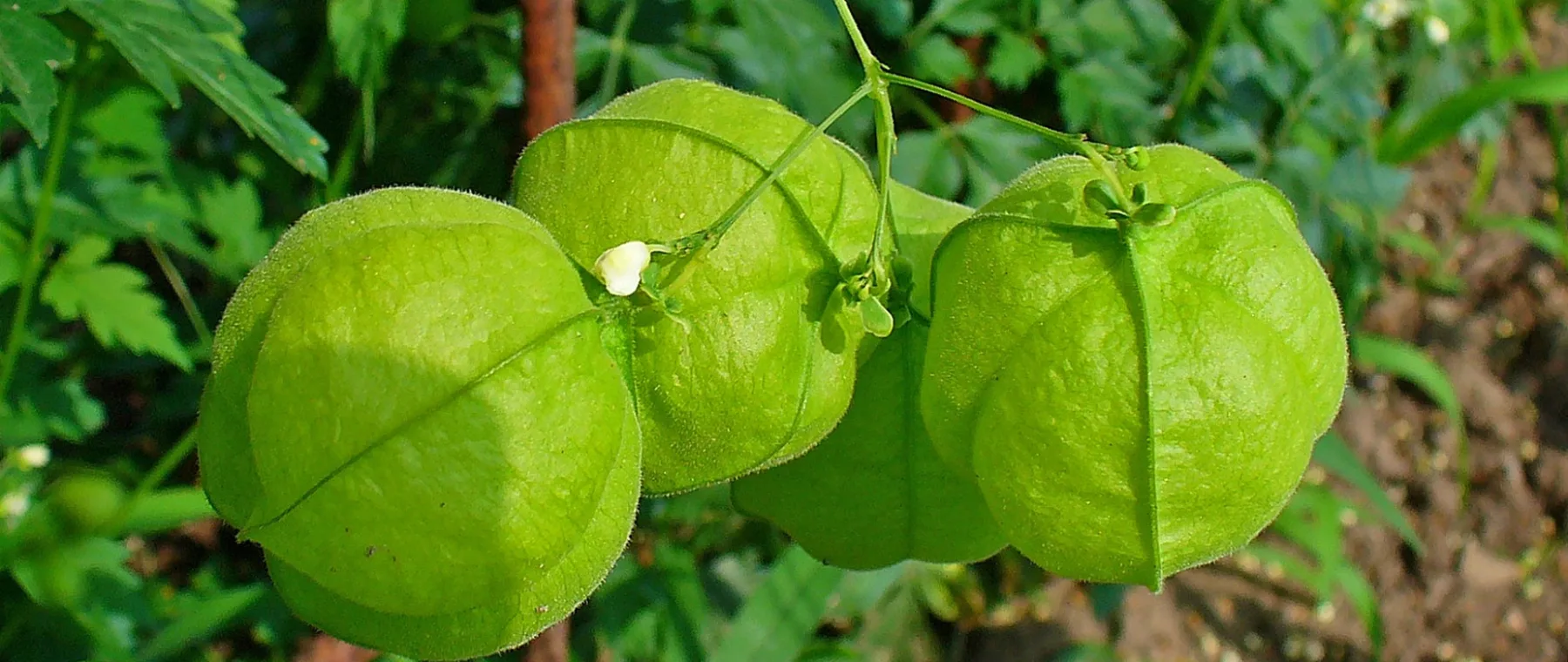
Cardiospermum halicacabum is a tropical plant widely found in India and already known in traditional medicine for its anti-inflammatory, antipyretic and soothing properties.
It has small, white flowers, and the drug, that is, the part used for medicinal purposes, consists of the fresh aerial parts of the flowering plant. The specific name of the genus "Cardiospermum" comes from the appearance of the peppercorn-sized, dark brown seeds with an easily recognizable white heart, and the denotation "halicacabum" comes from Greek and means "barrel of salt."
The plant extract of Cardiospermum halicacabum boasts anti-allergic and anti-inflammatory properties by virtue of a cortisone-like effect and known as the cortisone-like effect.
The active ingredients of the cortisone-like effect are the phytosterols contained in the flowering tops which have an anti-inflammatory, moisturizing, sebum-regulating, and anti-itching action, but above all they are able to stabilize the cell membranes of hair and mucous membranes, which are less responsive in dermatitis.
In this way, epidermal synthesis is not compromised and dryness and skin tightness frequent in corticosteroid therapies are avoided.
The phytosterols contained in cardiospermum normalize the course of synthesis of arachidonic acid metabolites without completely suppressing the formation of leukotrienes and/or prostaglandins, as occurs with the use of corticosteroids or nonsteroidal anti-inflammatory drugs. Since arachidonic acid metabolites perform important metabolic functions even in physiologically healthy cells, suppression of their synthesis leads to disorders that manifest themselves in the specific side effects of the previously mentioned therapeutic substances. Cardiospermum leads to a significant lowering of the activity of inflammatory enzymes and the content of cell-damaging lipid peroxides.
Several studies have shown that topical application of an extract of Cardiospermum halicacabum (10 percent TM of the plant) has been effective in controlling an almost ever-present symptom that strongly affects the general condition of the dermatitis sufferer: itching.
At the end of the tests, both objective symptoms such as erythema, edema, and papules were considered, as well as subjective symptoms, particularly itching and then hypersensitivity to pain and heat sensation; treatment was effective in 80% of patients where it resulted in either significant improvement or complete remission of all symptoms. Already after 2-3 days of application of the extract, a macroscopic anti-inflammatory effect was observed. No significant adverse effects appeared during the study.
The compilation of these data leads one to consider Cardiospermum halicacabum as a plant with an interesting potential for action against many forms of inflammation affecting the skin; its particular safety of use suggests its indication in many forms of dermatitis in both pediatric and adult settings, and so too in the elderly.
Topical application of Cardiospermum provides physiological support to allergic and inflammatory manifestations also accompanied by itching. It also promotes the restoration of the integrity of the irritated skin barrier.
The advantage of this natural cortisone is its high safety and tolerability, even when used for a prolonged time.
The plant is also useful for soothing reddened skin, in scaling, insect bites, and to treat diaper eczema.
Discover Naturetica Bielli's natural solution: CARDIOSPERMUM 15%.